I live in northern Vermont, and winter here is not background noise. It is pressure. It presses people indoors, it presses routines into ruts, and it presses secrets tighter because nobody can outrun anything when the roads are bad and the nights come early.
That’s where Last Seen Online started for me.
Not with a missing person poster. Not with a dramatic chase scene. With something quieter and worse.
A teenager dies, and the town does what towns do. People grieve, people speculate, people look for a reason. Then the phones come out. And the group chat becomes the place where everyone tries to make sense of what happened, even when they do not have the full story.
And then the messages start.
The image I could not shake
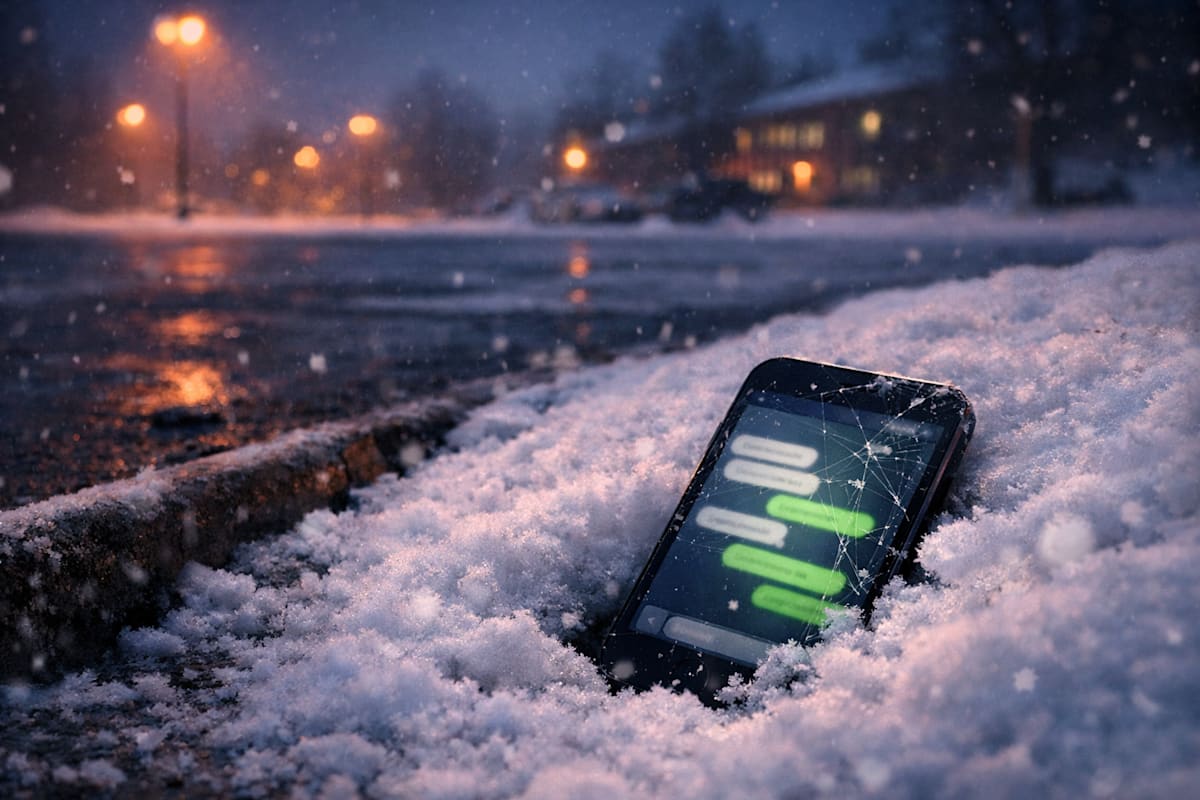
The first clear picture in my head was simple: a cracked smartphone lying face-up in the snow, half buried near a school curb. The screen is spiderwebbed. The cold makes the glass look sharper. A streetlight throws that pale orange glow across the parking lot. Everything feels still, like the world is holding its breath.
That phone became the symbol of the whole book for me.
Because a phone is not just an object anymore. It’s a container for a life. Photos, passwords, notes, voice memos, private jokes, messy feelings, arguments, apologies, screenshots that never should have been taken, and messages that can be misread a hundred different ways. Even after someone is gone, the phone stays. The accounts stay. The notifications keep trying to bring them back.
That’s the part that gets under my skin.
Grief with a notification sound
Grief used to come with silence built into it. Now it comes with reminders. A memory pops up. A tag resurfaces. A name appears in your suggested contacts. A chat thread sits there like a doorway you keep walking past.
In Last Seen Online, Eden is dead. That fact is not a twist. It’s the starting line.
The story is about what happens after. The way a friend group fractures when the person who held them together is gone. The way guilt spreads through a room without anyone saying it out loud. The way people start rewriting history to protect themselves.
Then Eden’s number sends a message.
And the ground shifts.
Same jokes. Same secrets. Same voice.
If you’ve spent enough time with someone, you know their rhythm. You know what they would say in a certain moment. You know the slang they use when they’re trying to sound chill. You know the kind of joke they make when they’re actually upset.
That familiarity is comforting, until it isn’t.
One of the big ideas behind this book is that a person’s voice can exist in a digital space even when they don’t. It can be copied, imitated, pieced together, and weaponized. And when you’re grieving, you are vulnerable to anything that feels like them.
Especially if it shows up on your lock screen.
That’s where the horror lives in this story. It’s not monsters in the woods. It’s the idea that Eden is gone, but the version of Eden that lives online can still reach into people’s lives and pull at the loose threads.
Small towns already run on stories
I love small towns. I also know what they’re like.
Small towns run on patterns and relationships. People recognize your car. They notice who sits with who at the basketball game. They track shifts in friendships like it’s weather.
Now put a tragedy in the middle of that.
Everyone wants an explanation, and when people want an explanation badly enough, they start building one. In the book, you see that happening in real time. Not just through conversations in hallways, but through texts, reactions, screenshots, and the way a single message can spread faster than the truth ever could.
A group chat can be a lifeline. It can also be a courtroom. It can turn grief into entertainment if nobody hits the brakes.
My chemistry brain definitely got involved
Chemistry is reactions. You take a system, you change the conditions, and everything shifts. Sometimes slowly, sometimes all at once.
That’s how I thought about this friend group.
Eden’s death is the disturbance. After that, every secret becomes more reactive. Every rumor becomes a catalyst. Every message changes the equilibrium. The characters are trying to stabilize something that cannot be stabilized, because the missing piece is not coming back.
Then the texts start coming, and it feels like the universe is playing a cruel trick.
Why I wrote it
I wrote Last Seen Online because I wanted a thriller that feels like right now without preaching. I wanted it to be creepy and fast, but also honest about how teenagers actually live and communicate. I wanted the friendships to feel real, the jokes to feel like something you would actually see on a phone, and the fear to come from something familiar.
Most of all, I wanted to write about what we do with someone’s digital life after they die.
What do we owe them?
What do we owe each other?
And what happens when grief gets hijacked by something that knows exactly what to say?
That’s the heartbeat of this book.
Winter setting, small-town pressure, a cracked phone in the snow, and a group chat that won’t stay quiet.
Eden is dead.
So why is her number still talking?